Deep Groove Ball Bearings are the most widely used bearing type in the world due to their versatility, cost-effectiveness, and ability to perform at high speeds. At Pune Bearings, we consider these the “all-rounders” of the industrial world.
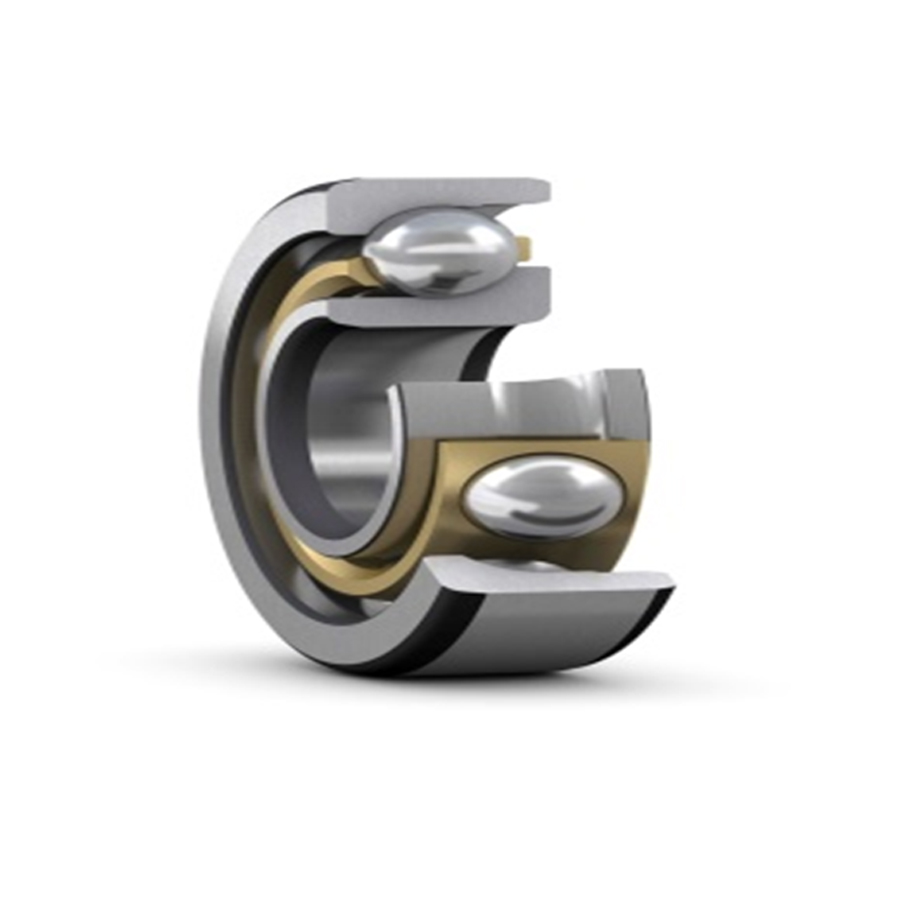
An Angular Contact Ball Bearing is a specialized type of bearing designed to handle combined loads: specifically, both radial (perpendicular to the shaft) and axial (parallel to the shaft) forces acting simultaneously.
A Self-Aligning Ball Bearing is a unique type of bearing designed to handle shaft misalignment. While most bearings require near-perfect alignment to function without heating up or failing, these bearings are built to “flex” and adjust to the shaft’s movement.
A Thrust Ball Bearings is designed specifically to handle axial (thrust) loads—forces that act parallel to the axis of the shaft.
Unlike the previous bearings we discussed, these are strictly “vertical” or “longitudinal” load specialists. They cannot handle any radial (side-to-side) loads whatsoever. If you apply a radial force to a thrust bearing, it will likely fall apart or fail immediately.
A Cylindrical Roller Bearing is a high-performance bearing designed to carry heavy radial loads at high speeds. Instead of balls, these bearings use cylinders as rolling elements.
Because the rollers have a “line contact” with the raceways (as opposed to the “point contact” of ball bearings), they can support much greater weight and are significantly more rigid.
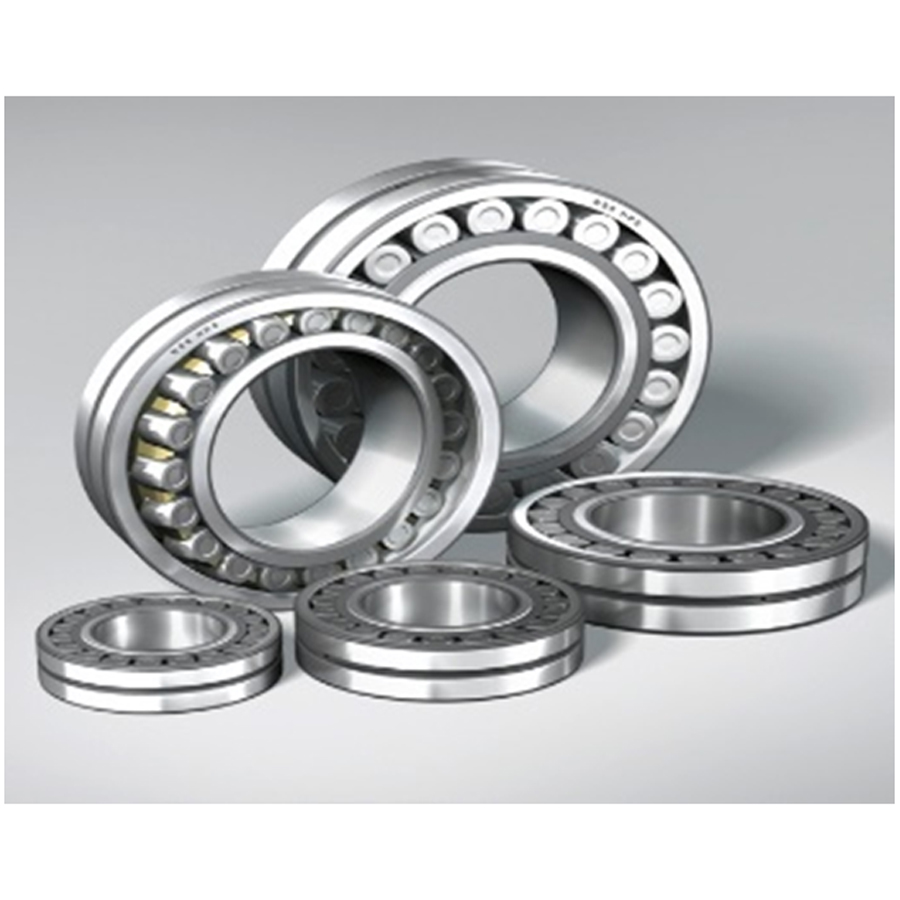
A Spherical Roller Bearing is the “heavy-duty” cousin of the self-aligning ball bearing. It is designed to manage extremely heavy radial loads and moderate axial loads while simultaneously correcting for misalignment.
If a self-aligning ball bearing is a passenger car, a spherical roller bearing is a dump truck—it uses barrel-shaped rollers instead of balls to distribute weight over a larger surface area.
A Tapered Roller Bearing is a heavy-duty specialist designed to handle large simultaneous radial and axial loads.
The defining characteristic of this bearing is the geometry: both the rollers and the raceways are shaped like truncated cones (tapers) that meet at a common “apex” point on the bearing’s main axis.
A Needle Roller Bearings is a variation of the cylindrical roller bearing that uses very thin, long rollers. The length of the roller is typically at least three to ten times its diameter.
Think of them as the “space-savers” of the bearing world. They are designed to provide a high load-carrying capacity while occupying the smallest possible amount of vertical space (radial height).
A Rod End Bearing, often called a heim joint (in North America) or a rose joint (in the UK), is a mechanical articulating joint.
Think of it as a heavy-duty, industrial version of your hip socket. It’s designed to provide a point of connection that allows for angular rotation and misalignment while transmitting motion.
A Linear Bearing Block (also known as a Pillow Block or Bearing Carriage) is a specialized housing designed to provide smooth, low-friction motion along a straight path.
While a rod end allows for rotation in a fixed spot, a bearing block is what allows a component—like a 3D printer head or a heavy industrial drawer—to slide back and forth along a rail or shaft.
A Linear Bearing is the general term for any device that enables motion in a straight line with minimal friction. While a standard bearing (like a skateboard wheel bearing) allows for rotation, a linear bearing allows for translation.
Essentially, it is the mechanical component that allows one object to slide over another smoothly, preventing the “stiction” or grinding you’d get with two flat surfaces rubbing together.
A Linear Guideway Block (often just called a “runner block” or “carriage”) is the high-performance, heavy-duty cousin of the standard bearing block.
While “linear bearing” is a broad term that can include cheap hobbyist parts, a Guideway Block specifically refers to a precision-engineered carriage designed to ride on a profiled rail (a square or rectangular rail with precision-ground grooves). These are the gold standard for industrial machinery.
A Spherical Thrust Bearing is a specialized type of rotary bearing designed to handle heavy axial loads (forces parallel to the shaft) while also accommodating misalignment between the shaft and the housing.
Think of it as a hybrid: it has the “heavy-lifting” power of a thrust bearing but the “swivel” flexibility of a spherical joint.
WhatsApp us